AI in the sale. What owner-led companies are doing with it, and what it's worth.September 28, 2026 · 8 stories
This week
Where the saved hours go
AI is saving sellers almost five hours a week. Most companies are losing them anyway. Plus seven other things worth knowing this week.
Editorial illustration / AI-generated
Hey,
Welcome to the first issue of The AI Foundry. Every week I'm going to pull together what's actually happening with AI inside businesses like yours: owner-led, with a sale that takes more than one conversation to close. Real companies and real results where they exist, plus a plain label whenever a number comes from the company selling the tool. It'll be a short list, and I'll tell you when a number is shaky.
The theme this week was saved time. AI is giving people real hours back, and what the business does with those hours is a separate decision that most companies aren't making on purpose.
01
Research
AI is saving sellers almost five hours a week. Most companies are losing them anyway.
4.8hrs
Average saved per seller, per week, by AI tools
72%
of sales orgs report low reinvestment of that time
2.2x
more likely to beat customer growth goals when the time is reinvested
3.1x
more likely to beat lead-to-opportunity conversion goals
4.8 hrs and 72%: Gartner. 2.2x and 3.1x: Gartner survey of 210 sales leaders, Jan–Feb 2026
Gartner reports that sellers using AI tools save an average of 4.8 hours a week, but 72% of sales organizations report low reinvestment of that time into high-value selling. In its survey of 210 sales leaders in January and February, the ones that put the time back were 2.2x more likely to beat their customer growth goals and 3.1x more likely to beat lead-to-opportunity conversion goals.
Directional Gartner doesn't say how the 4.8 hours was measured. The 2.2x and 3.1x come from its survey of sales leaders, so they're reported, not measured.
If nobody decides where the saved hours go, they probably drift to whatever's loudest that week. Before you roll out any tool, write down what your reps should do with the time it frees up. That one line is probably worth more than the tool.
02
Success story
A 26-year-old striping company took work-order intake from hours to minutes
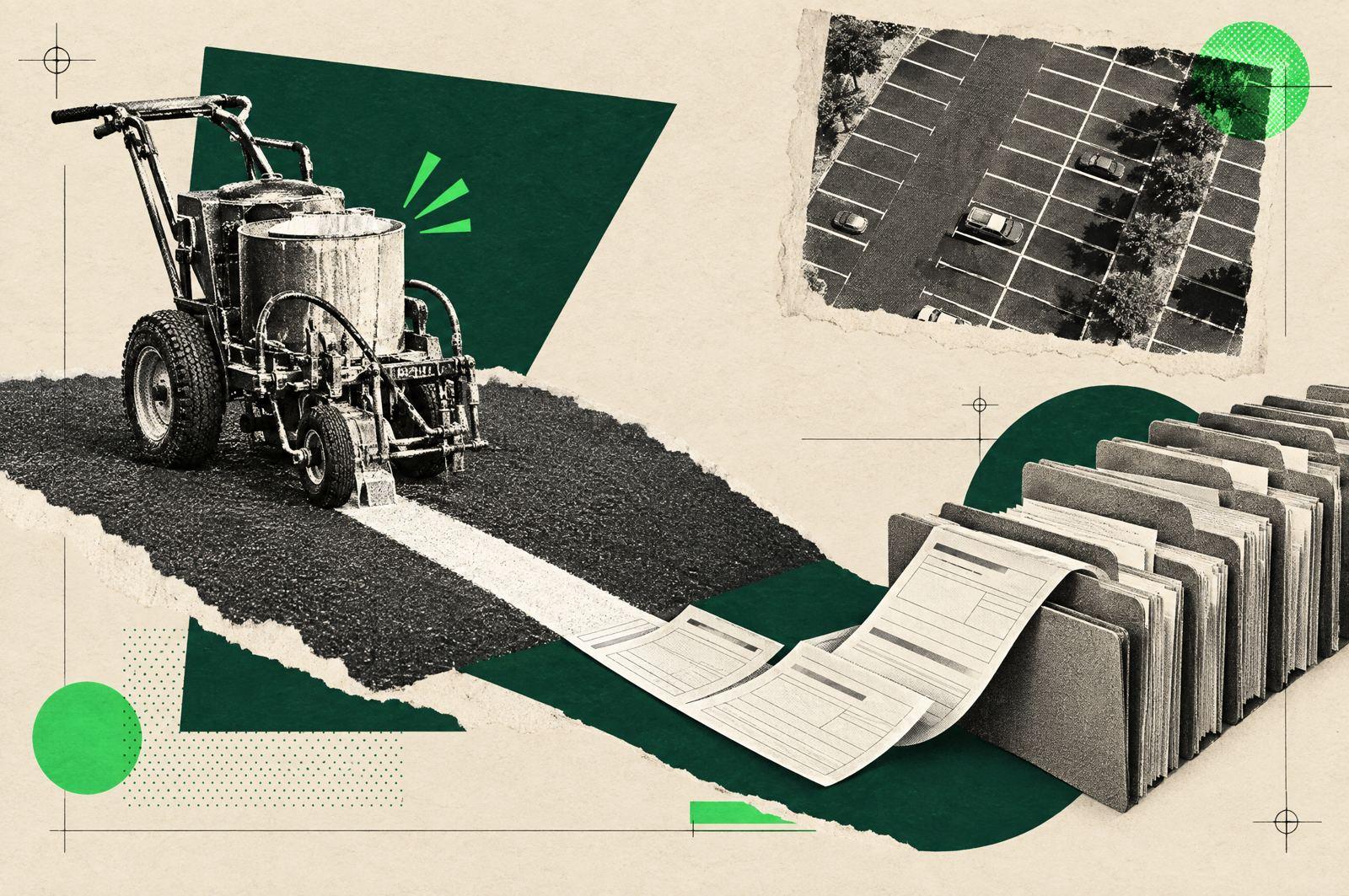
Editorial illustration / AI-generated
Appell Striping & Seal Coating on Long Island, a company with more than $10M in annual revenue, put AI agents to work through Hyperagent. The intake agent reads each incoming work order, flags anything that isn't parking-lot work, recommends five or six subcontractors from Appell's own history, requests quotes and tells the coordinator when one comes back. A second agent handles prospecting emails with before-and-after mockups of the property.
4–6 hrs10min
Human time per work order, down from 4 to 6 hours
Vendor-reported
That's at 100+ work orders a week at peak. One employee gets about 7 hours a week back.
Vendor-reported Published by Hyperagent. Their own write-up says the company's growth figures don't isolate what the agents caused, and the video and article give different growth numbers, so I left those out.
Appell already had 26 years of subcontractor history, and the owner could lay out intake as eight or nine steps. The agent had a process to follow. If your intake lives in one person's head, start there.
03
Success story
An HVAC company took its after-hours booking rate from 25–40% to 60–70%
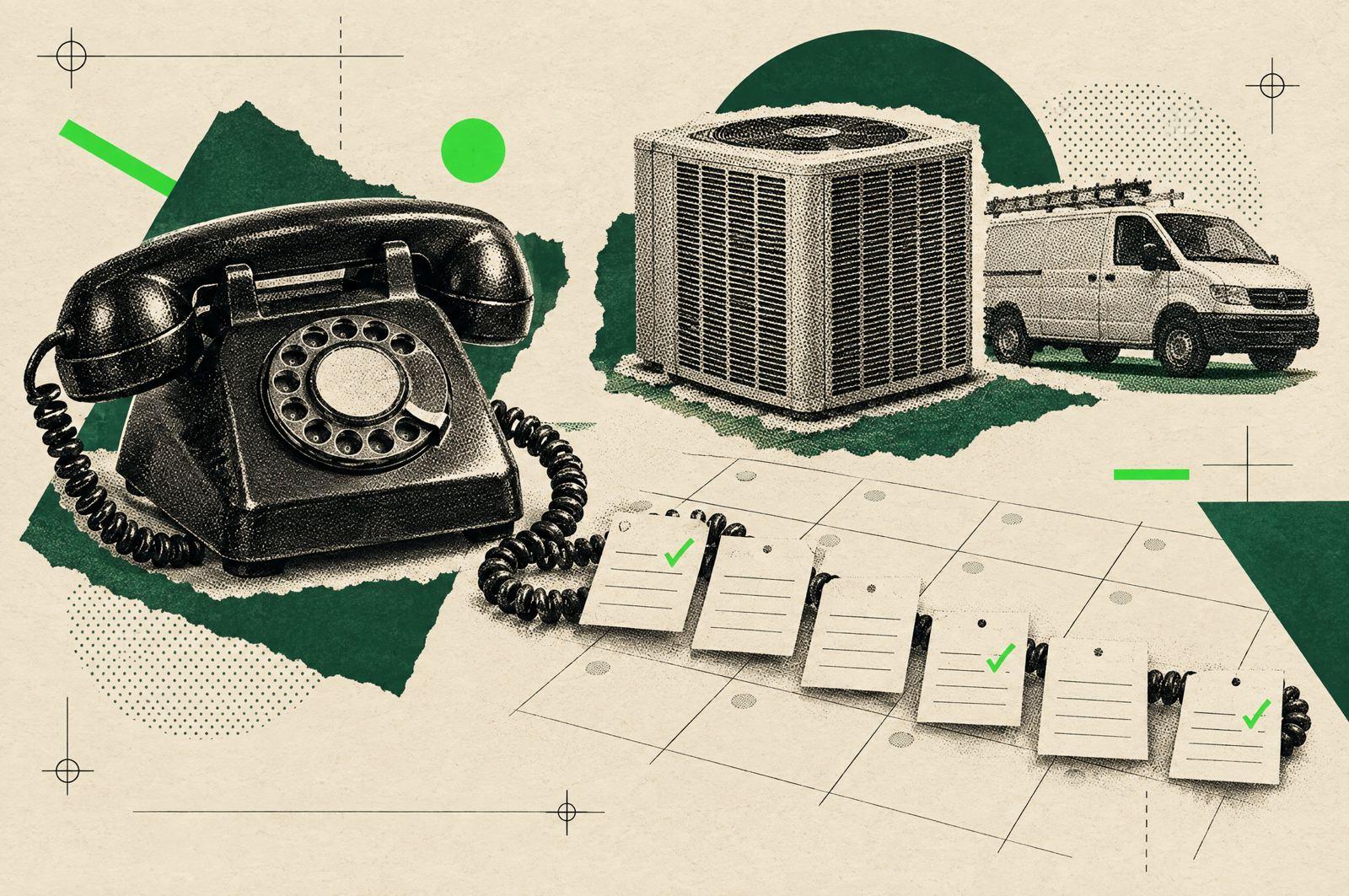
Editorial illustration / AI-generated
Jolly Heating, Air, Plumbing & Electric in Cincinnati and Northern Kentucky replaced the third-party service that took its after-hours calls with an AI tool (Probook) that handles calls, booking and dispatch.
After-hours booking rate went from 25–40% to 60–70%. The company says it grew 50% while adding no dispatch staff and only one CSR, alongside 40% revenue growth.
After-hours booking rate
After-hours booking rate
Answering service
25–40%
AI on the phones
60–70%
Company-reported ranges, via Contracting Business
Measured result Trade press, figures reported by the company. The article puts the growth next to the AI rollout but doesn't separate what AI caused.
A booking rate is a stage conversion rate, and it's the kind of number that tells you whether a tool is working. If you can't say what your conversion from first call to booked appointment is today, you won't be able to tell whether any tool helped.
04
Use case
AI follow-up on estimates that went quiet
Editorial illustration / AI-generated
Leonard Splaine Co. in Virginia uses an AI tool (UpSmith) to follow up on estimates that didn't close the first time around.
+25%
Follow-up sales on unsold estimates
Company-reported, via ACHR News
Measured result Trade press, figure reported by the company. From April, older than the rest of this issue. I included it because it's the cleanest staged-sale example I found.
Most owner-led companies have a pile of quotes that went quiet. Chasing them is nobody's job, so nobody does it. This is the least glamorous use of AI in the issue and probably the one I'd start with.
05
Idea
Mark Roberge thinks AI brings back the full-cycle seller
Editorial illustration / AI-generated
Roberge is HubSpot's former CRO and teaches sales at Harvard Business School. His argument: splitting the sale into SDRs, AEs and CSMs made sense when reps had to cover each other's skill gaps. AI closes a lot of those gaps, so one rep can carry the whole cycle again. He calls selling time the hidden KPI. The best reps spend around 15 hours a week actually selling, and he thinks AI can double that.
~15hrs
A week the best reps spend actually selling. Roberge thinks AI can double it.
Expert estimate
Directional Expert opinion from a podcast episode.
Good news for most of you, since owner-led companies usually can't afford the SDR-to-AE assembly line anyway. The catch is that a full-cycle rep needs the whole process written down, because they're running every stage of it.
06
Data point
76% of small businesses use AI. 14% say it's built into how they run.
Goldman Sachs' 10,000 Small Businesses Voices survey (1,256 business owners, run with Babson College and David Binder Research) found that 76% currently use AI, but only 14% say it's fully embedded in their core operations.
Small businesses and AI
Small businesses and AI
Currently use AI
76%
Say it's fully embedded in core operations
14%
Goldman Sachs 10,000 Small Businesses Voices, 1,256 owners
Directional Survey of Goldman's own program graduates, not a random sample. From March.
Most of the owners I talk to are using AI somewhere. Very few have a process underneath it for AI to plug into, and that's the gap.
07
Before you buy
Fewer than half of “AI agent” sales tools publish proof you can check
Editorial illustration / AI-generated
enso audited 10 agentic go-to-market platforms against 26 public sources and five criteria. Their test question was simple: when a vendor says “AI agent,” does it actually finish the job, or does it queue the next step for a human? Fewer than half of the vendors publish proof you can check. Pricing ran from $80 a month to a $40,000 annual contract, and price told them almost nothing about time to value.
<5of 10
agent platforms audited publish proof you can check
enso's audit summary
Directional enso sells in this category, and I couldn't get to the full study, only their summary.
Borrow their question for your next demo. Ask the vendor to show you the agent finishing the job, start to end, on your own data.
08
From the owners
One sentence after every call
Editorial illustration / AI-generated
An owner on r/smallbusiness writes a single sentence in the contact's notes field after every client call, before he puts the phone down (“Wants the garden, hates the commute, decides with his wife on Sundays”). He says two years of it has changed more about how he works than anything else he's tried, because when someone calls back three weeks later, he knows exactly where things stand.
This is CRM discipline, and it's exactly what makes AI useful later, because AI can only work with what got written down. If your reps did this after every call, you'd have something for AI to read. Most companies don't.
The takeaway
What this means if you're still the one selling
Every result in this issue sat on top of something that already existed: a process someone could lay out step by step, a conversion rate worth watching, a habit of writing things down. AI sped up things that were already there.
So if you're still the one carrying the important deals, start by asking whether the process your reps would follow exists anywhere outside your head. If it doesn't, that's the work, and the AI part gets a lot easier once it's done.
Cheers, TeeJay Johnson Owner, Foundry Revenue Partners
Editorial illustration / AI-generated
Free pre-assessment
Is your sales process ready for AI?
The free pre-assessment looks at how your sales engine is running today against your goals, before anything gets recommended.